Qualcomm B19 v0.0.1 Archive: DIAG and Identity-Restoration Limits
“Qualcomm IMEI Repair Tool B19 v0.0.1” is an unauthenticated third-party Windows archive. Its name and interface do not establish its publisher, safety, supported chipsets, device builds, required authorization, or ability to write a particular NV item.
A DIAG COM port proves that a modem diagnostic interface is exposed. It does not prove that the phone accepts an identity write, that the requested NV layout is correct, or that radio calibration is intact.
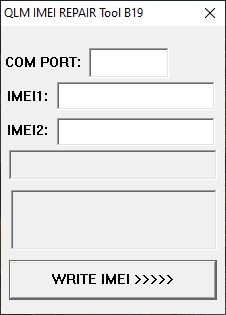
Scope and ownership
Only restore the manufacturer-assigned identifier belonging to the same physical device. Do not copy another phone’s QCN/NV data, create a new identifier, or use an identity write to evade a blocklist. Preserve all readable same-device backups before any operation.
“Null IMEI,” “invalid IMEI,” and “unknown baseband” overlap but do not prove one damaged item. Firmware mismatch, unreadable NV storage, secure access control, or hardware failure require different diagnosis.
Archive and support evidence
The historical archive used extraction password gsm6.com. A password and successful extraction do not authenticate it. Record the source URL, size, SHA-256 hash, signature, detection names, tool log, exact device, chipset, Android build, baseband, and DIAG hardware ID. If provenance is incomplete, do not execute it on a production workstation.
Do not infer Xiaomi, Vivo, Oppo, Pixel, or generic Snapdragon support from a chipset label. Exact support must be demonstrated for the named model, build, operation, and transport.
Controlled restoration test
- Verify the original identifier from the device packaging or purchase record and keep it private.
- Back up all readable same-device NV/QCN/calibration data.
- Use a traceable Qualcomm Windows driver and confirm the exact DIAG interface.
- Capture the before state and full program log.
- Perform only the supported same-device restoration operation.
- Reboot twice and verify original identifier readability, baseband, SIM registration, calls, data, and persistence.
A program success message is not enough. If the baseband remains unknown, a generic NV write is not a substitute for diagnosing firmware, storage, or hardware.